01 —Materials
Why herringbone still sets the standard.
Geometry, light, and a pattern that has held its place since the 1600s.
Herringbone is one of the oldest flooring patterns still in continuous use — Roman engineers set stones in the same interlocking V to hold their roads together, and by the 1600s French parquetiers had refined it into the floors of grand houses. Four centuries later it has outlived every passing fashion. That endurance is not nostalgia. It is geometry.
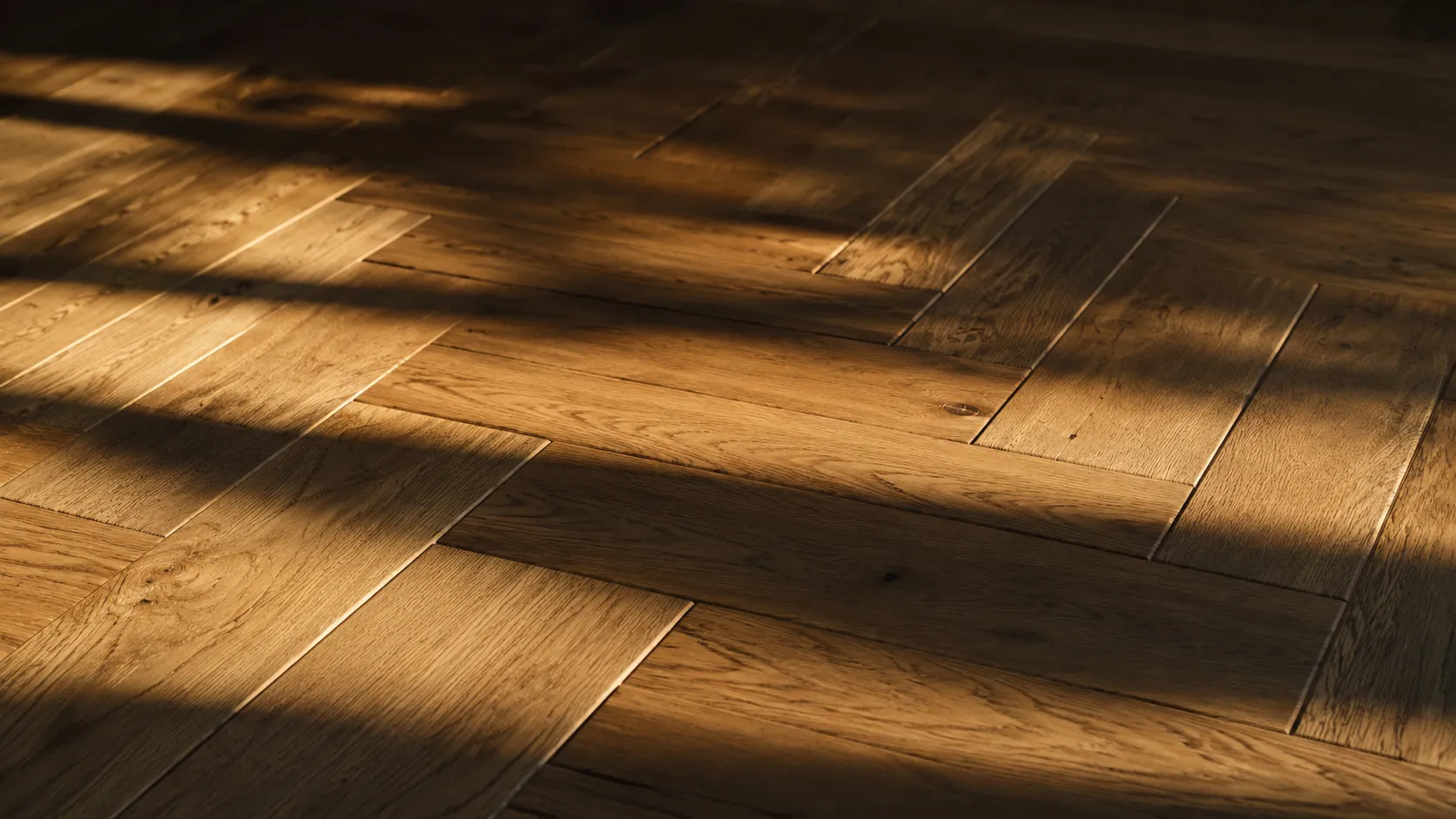
A herringbone floor is built from identical rectangular blocks turned ninety degrees to one another, so each block braces the next. The eye reads the resulting zig-zag as movement and depth rather than a flat plane, and because the grain of every second block runs across the light, the surface never looks uniform. Move through the room and the pattern shifts with you — one shaft of afternoon sun will pick out a run of blocks that were invisible a moment before. It is the reason a herringbone floor feels alive in a way a straight-plank floor rarely does.
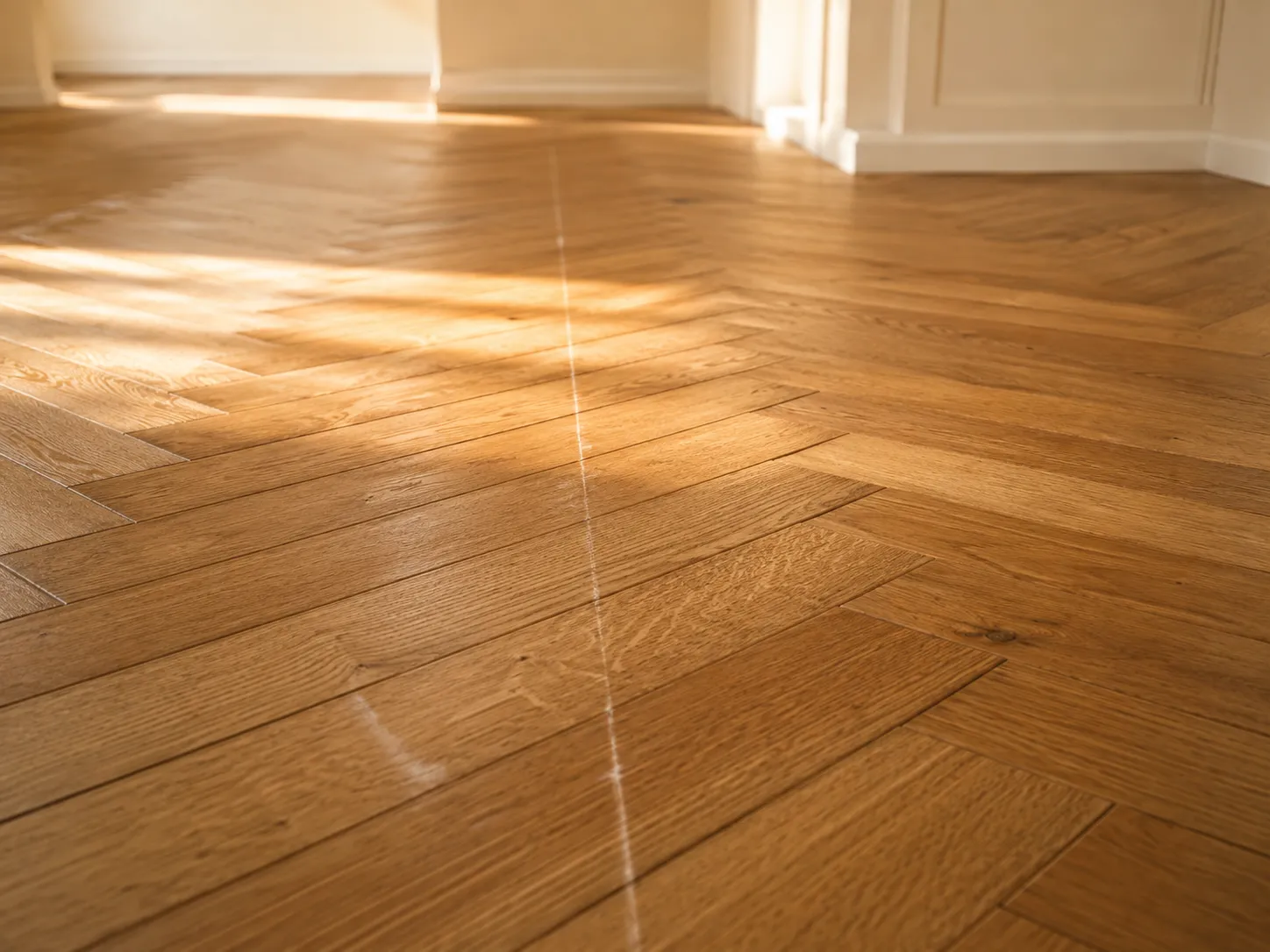
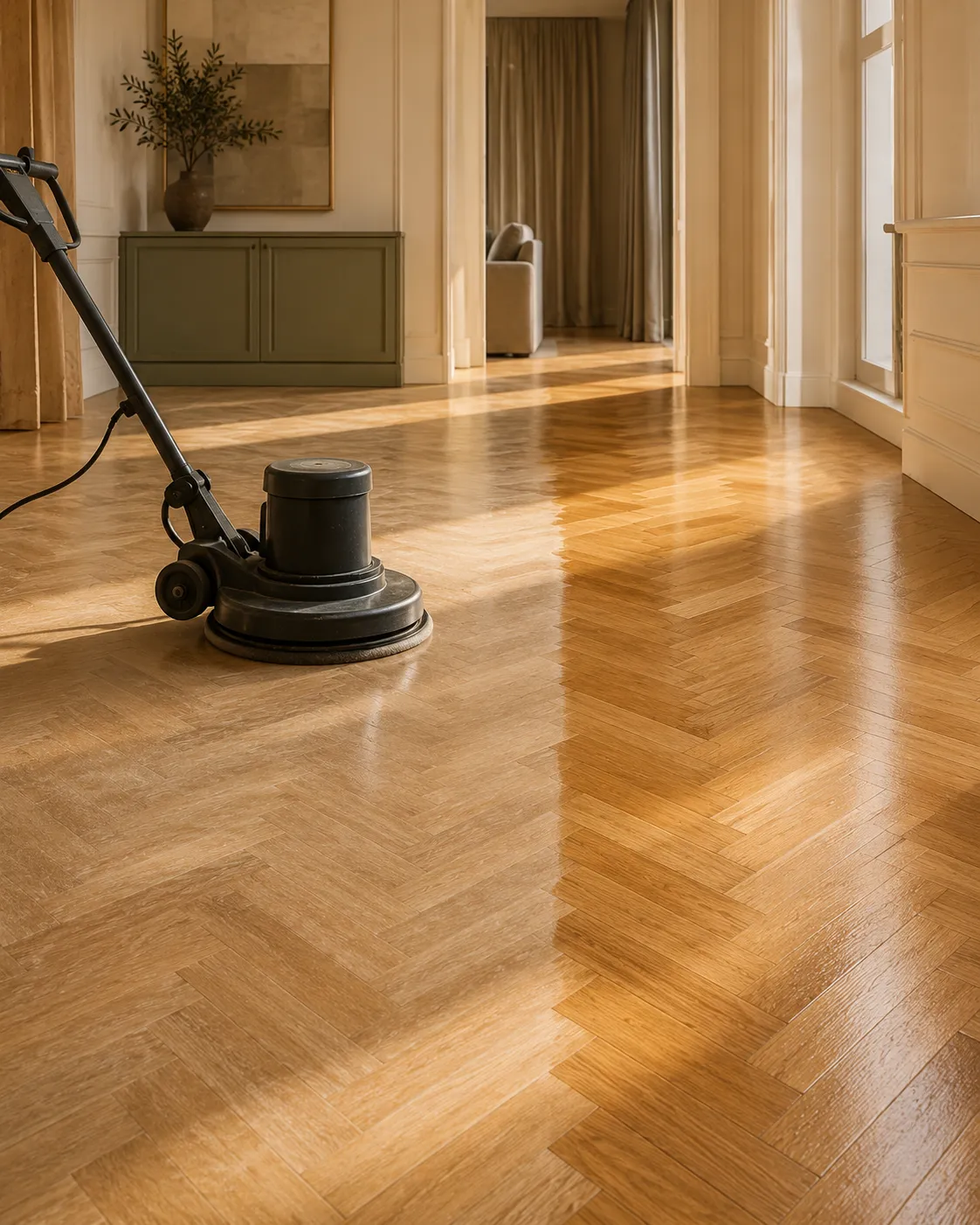
That richness is unforgiving to lay. The whole pattern hangs off a single setting-out line struck down the centre of the room; every block references it, so a first course that is a millimetre out compounds into a visible drift by the far wall. Long sightlines and generous daylight — exactly the conditions of a Jeddah villa — expose the smallest error in angle or joint. We set out with a laser, prepare the subfloor flat to DIN standard, and lay the field by hand, working outward from the datum so the pattern runs true across rooms and thresholds.
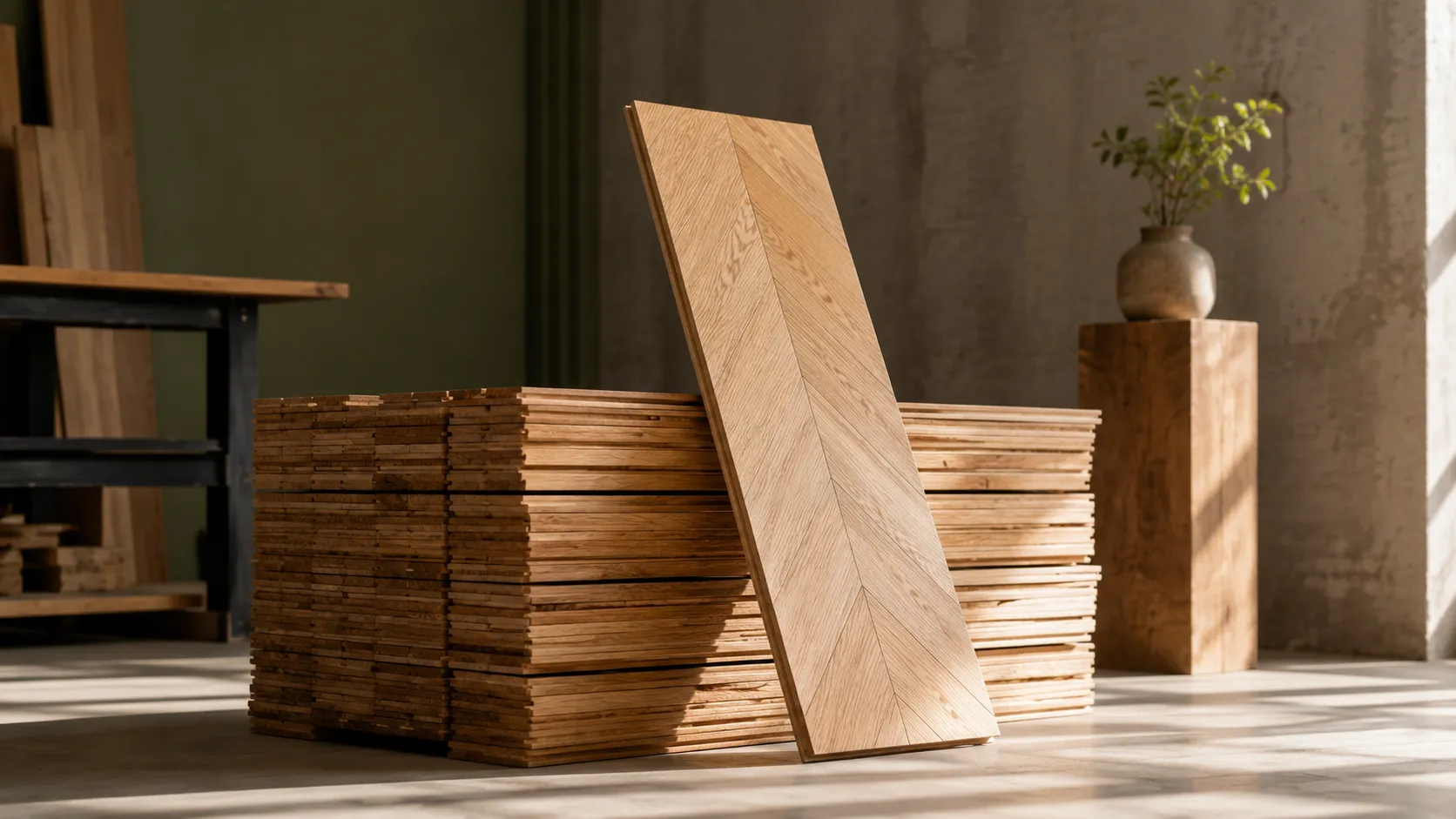
Chosen well, herringbone rewards the discipline. Engineered oak gives it the dimensional stability the Kingdom's climate demands while keeping a real-wood top layer that can be refinished for decades. The pattern that defined a luxury floor in 1650 still does the same thing today — it turns a floor into the quiet architecture of a room.